

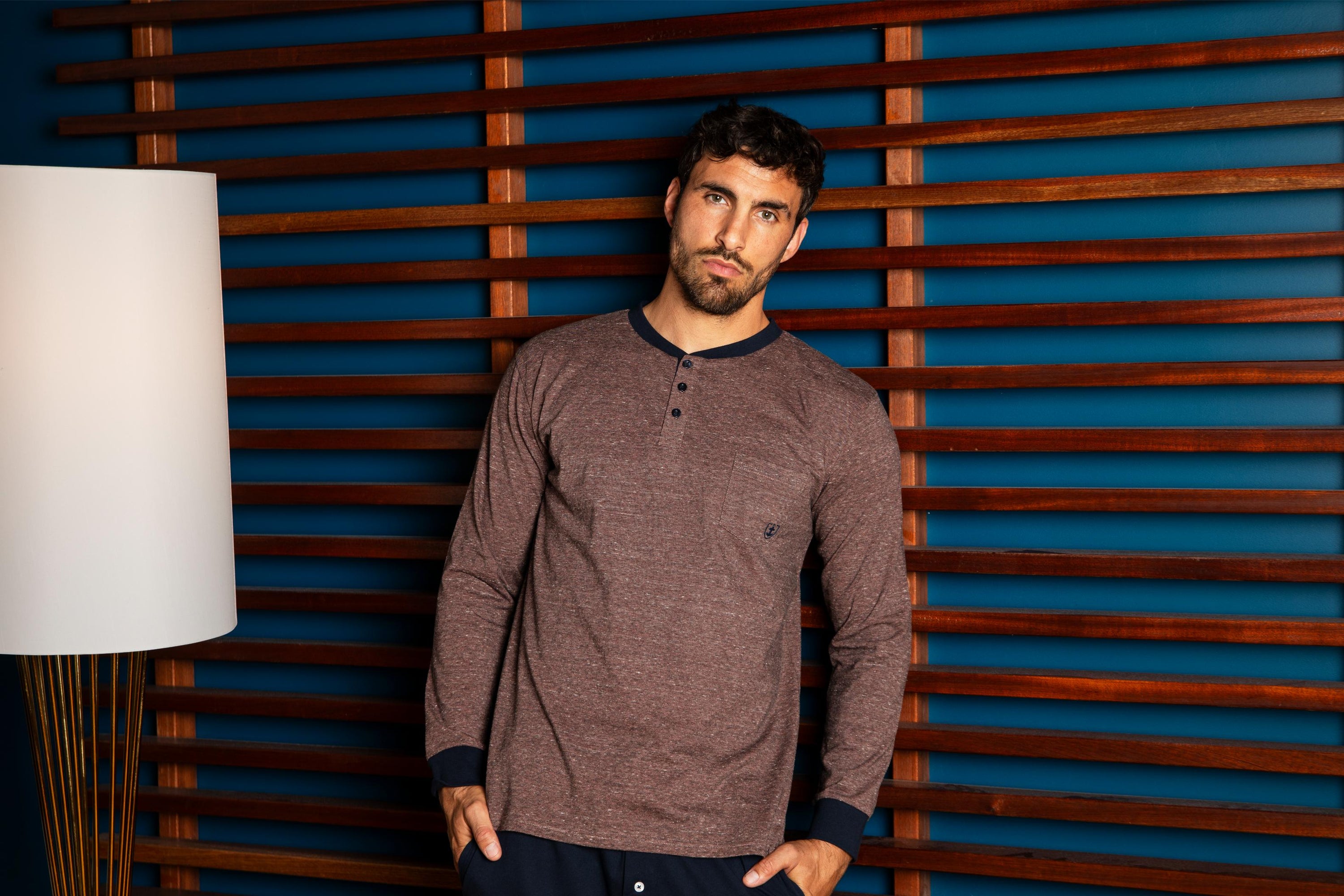
Pyjamas, the garment we slip on to relax after a long day at work, are much more than simple nightwear.
They're a real ally for our everyday well-being and, let's face it, a symbol of comfort at home.
Matching, mismatched, long, short: did you know that the history of pyjamas is as fascinating as the essential place they hold in our wardrobe?

The history of pyjamas: where do they come from?
Pyjamas have their roots in India, where they were originally just a simple traditional garment worn by men and women.
The word "pyjama" comes from "pajama", which means "leg garment" in Hindi, referring to loose trousers or drawers gathered at the waist by a drawstring.
Made mainly of cotton to offer maximum comfort in hot countries, this garment was originally made to be worn during the day.
British colonists gradually adopted it and brought it back to Europe, changing the concept along the way by adding a "shirt" jacket to make it a 2-piece set.
From then on, pyjamas replaced the "nightshirt"; adapting to European customs, they became truly comfortable and suited to the night.
It was in the 1920s that Coco Chanel propelled pyjamas into a "star" garment, reinventing them first as daywear and then as nightwear again, enhancing them with sumptuous fabrics. Worn by women and men, they were a real success that spread across the whole European population of the 20th century.
Pyjamas: nightwear in their own right.
Over the years, pyjamas evolved and their role changed. At the end of the 19th century, they became more functional and comfortable, replacing the long, cumbersome nightgowns mainly worn by women.
Pyjamas found their place as modern, practical nightwear, ideal for a good night's sleep or a moment's rest.

The nightshirt: the origin of modern pyjamas.
Before pyjamas became the essential "star" of the night, nightshirts reigned over the kingdom of night-time comfort.
Made from a single piece of fabric, this loose garment, often made of cotton poplin or flannel, was commonly worn, especially in Europe.
The nightshirt was the most popular option in households.
The 1920s: the golden age of pyjamas
The 1920s marked a decisive turning point in the history of pyjamas.
This era saw traditional nightwear transformed into an ultra-fashionable outfit.
The finest fabrics, such as satins, poplins and flannels, made it possible to create pyjamas that were both elegant and comfortable, becoming a true symbol of style and sophistication for men and women.
One thing is certain for that era: satin or flannel pyjamas embodied women's emancipation, offering them style and modernity.

2-piece pyjamas: an evolution of the traditional style
2-piece pyjamas, with their loose trousers and button-up shirt, quickly won us all over. Today, this comfort garment is worn both indoors, for "lounging" at home and sleeping, and outdoors.
Pyjamas adapt. You can mix tops and bottoms, wear the trousers with a chunky jumper in winter, for example, or a simple T-shirt in summer: as many combinations as there are moods!
More comfortable, more practical and above all more elegant, they have become an essential part of our everyday lives. They've become our "rest" and "relaxation" garment, no longer just for "night".
In conclusion, simply wear your pyjamas … and stop hiding them!

Satin, flannel, velour and other fine fabrics …
The choice of fabric for pyjamas is crucial to guarantee comfort and quality.
Among the most popular fabrics are satin, silk, flannel, fine cotton poplins and jersey knits.
For a refined look, satin and silk are the ultimate! Soft, silky, shiny textures that make your pyjamas a chic garment to wear day and night.
Flannel, meanwhile, is ideal for cooler nights, thanks to its subtly brushed, downy surface. This quality is perfectly suited for maximum comfort.
Cotton poplin pyjamas are a great classic and a must in your wardrobe. Pleasant and light to wear, cotton poplin regulates your body temperature perfectly in all seasons and, above all, is easy to care for.
Mariner tip: To maximise your well-being and move freely, choose knits (jersey, velour or fleece, for example…).
At Mariner, comfort has been our priority since 1967. We create "Flâneur" pyjamas that are not only pleasant to wear but also embody elegance and self-confidence.
Our men's pyjama collections are carefully thought out every season and made with quality fabrics.

Relaxing in style is our speciality!


